One of the most common questions I hear from new parents is: “What’s the best pacifier for my baby?” It’s a great question, because not all pacifiers are created equal when it comes to your little one’s developing teeth and jaw. The right pacifier can satisfy your baby’s natural sucking reflex while supporting healthy oral development. The wrong one—or using any pacifier for too long—can lead to dental problems down the road.
Why Pacifier Choice Matters for Dental Health
Babies are born with a strong sucking reflex that helps them feed and provides comfort. Pacifiers satisfy this need, and research shows they may even reduce the risk of sudden infant death syndrome (SIDS) when used during sleep. However, the shape of the pacifier and how long your child uses it directly impacts their developing mouth.
The American Academy of Pediatric Dentistry acknowledges that pacifier use is preferable to thumb sucking because it’s an easier habit to control and break. But prolonged pacifier use can cause changes to the roof of the mouth, tooth alignment, and jaw position. Choosing the right pacifier from the start helps minimize these risks.
What to Look for in a Baby Pacifier
When shopping for pacifiers, you’ll find dozens of options with different shapes, sizes, and materials. Here’s what actually matters from a dental perspective.
Nipple Shape: Orthodontic vs. Traditional
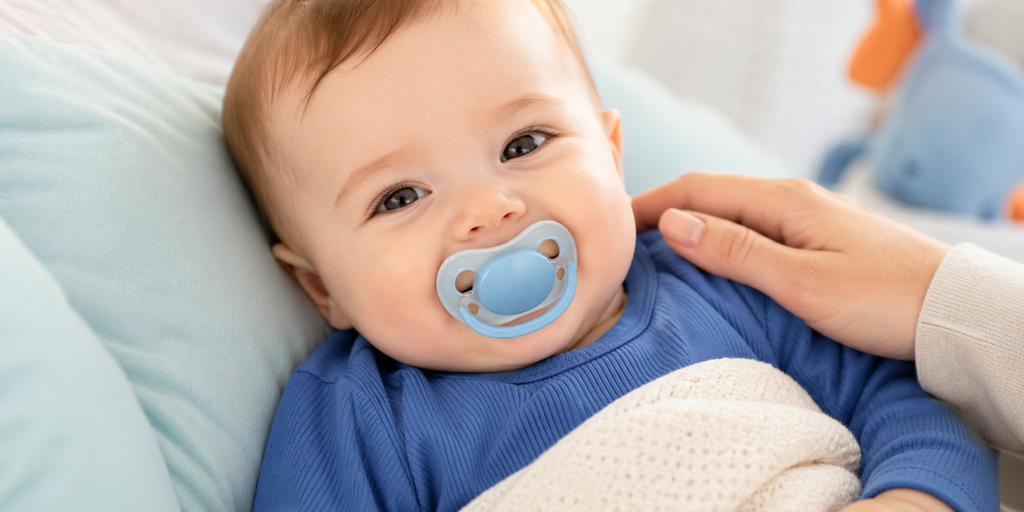
Orthodontic pacifiers have a flattened, symmetrical nipple designed to mimic the shape of a mother’s nipple during breastfeeding. This shape distributes pressure more evenly across your baby’s palate and may reduce the risk of dental misalignment. Traditional round nipples, while still safe, put more concentrated pressure on the palate.
Look for pacifiers labeled “orthodontic” or “dentist approved.” Many pediatric dentists, including myself, recommend these designs for babies who use pacifiers regularly.
Size Matters
Pacifiers come in different sizes for different ages—typically newborn (0-6 months), infant (6-18 months), and toddler (18+ months). Using the correct size ensures the nipple fits properly in your baby’s mouth without putting excessive pressure on developing teeth and gums. A pacifier that’s too large can interfere with proper jaw closure.
Material: Silicone vs. Latex
Most modern pacifiers use either silicone or latex:
- Silicone: Firmer, more durable, easier to clean, and less likely to harbor bacteria. Silicone doesn’t retain odors and is hypoallergenic. This is my preferred recommendation.
- Latex: Softer and more flexible, which some babies prefer. However, latex breaks down faster, can trigger allergies in sensitive babies, and needs to be replaced more frequently.
Whichever material you choose, inspect pacifiers regularly for signs of wear, cracks, or stickiness, and replace them immediately if damaged.
One-Piece Construction
Choose pacifiers made from a single piece of molded material rather than multiple parts assembled together. One-piece pacifiers are safer because they can’t break apart into choking hazards. They’re also easier to clean thoroughly.
Ventilated Shield
The shield (the part that rests against your baby’s face) should have ventilation holes to allow air circulation and prevent moisture buildup, which can cause skin irritation around the mouth.
Pacifiers I Recommend to Parents
While I don’t endorse specific brands, I do look for certain features when parents ask for recommendations. The best pacifiers for dental health typically share these characteristics:
- Orthodontic or symmetrical nipple shape
- One-piece silicone construction
- Age-appropriate sizing
- BPA-free and phthalate-free materials
- Ventilated shield with rounded edges
- Easy to clean (dishwasher-safe is a plus)
Popular options that meet these criteria include designs from brands like Philips Avent Soothie, MAM Perfect, NUK Orthodontic, and Dr. Brown’s HappyPaci. However, every baby is different—some prefer certain shapes or materials. You may need to try a few before finding one your baby accepts.
How Pacifiers Affect Teeth and Jaw Development
Understanding the potential dental effects helps you make informed decisions about pacifier use.
Open Bite
Prolonged pacifier use can cause an “open bite,” where the front teeth don’t meet when the mouth is closed. This happens because constant pressure from the pacifier prevents the front teeth from erupting fully or pushes them outward.
Crossbite
Extended pacifier use may narrow the upper jaw, causing the upper teeth to sit inside the lower teeth (crossbite) rather than outside where they belong. This affects how your child bites and chews.
Palate Changes
The roof of the mouth is soft and moldable in infancy. Prolonged sucking pressure can create a higher, narrower palate than normal, which may affect breathing, speech development, and permanent tooth alignment later.
The good news? Most of these changes are reversible if pacifier use stops by age 2-3. The earlier you wean, the more likely your child’s mouth will self-correct without intervention.
When to Stop Pacifier Use
Timing matters more than pacifier choice when it comes to preventing dental problems. Here’s what the research and clinical experience tell us:
The Ideal Timeline
- 0-6 months: Pacifier use is generally safe and may provide SIDS protection during sleep
- 6-12 months: Begin limiting pacifier use to sleep times and stressful situations
- 12-24 months: Actively work toward weaning
- By age 2: Ideally, daytime pacifier use should stop
- By age 3: Complete weaning is strongly recommended to prevent lasting dental effects
The American Dental Association advises that pacifier use beyond age 4 increases the risk of dental problems that may require orthodontic treatment.
Signs It’s Time to Wean
Beyond age guidelines, watch for these signs that pacifier use is affecting your child’s mouth:
- Changes in how the front teeth are coming in
- The upper front teeth tilting outward
- A gap forming between upper and lower teeth when biting down
- Speech issues or lisping
- Skin irritation around the mouth from constant moisture
If you notice any of these signs, schedule a visit to our Falls Church office so we can assess your child’s dental development and provide personalized guidance.
Tips for Weaning Off the Pacifier
Giving up the pacifier can be challenging for both children and parents. These strategies make the transition smoother:
- Go gradual: Start by limiting pacifier use to bedtime only, then gradually reduce from there
- Offer alternatives: A special stuffed animal or blanket can provide comfort during the transition
- Use positive reinforcement: Praise your child for going without the pacifier and celebrate milestones
- Try the “Pacifier Fairy”: Similar to the Tooth Fairy, the Pacifier Fairy takes pacifiers to babies who need them and leaves a small gift
- Don’t go back: Once you commit to weaning, stay consistent. Going back and forth makes the process harder
For more tips on healthy oral habits, see our guide on keeping your child’s teeth healthy.
Pacifier vs. Thumb Sucking: Which Is Better?
Many parents wonder whether they should encourage pacifier use to prevent thumb sucking. From a dental perspective, pacifiers are generally the better choice for several reasons:
- Easier to control: You can limit when and where a pacifier is used; the thumb is always available
- Easier to wean: You can take a pacifier away; you can’t remove a thumb
- Less intense suction: Thumb sucking often involves stronger suction pressure that causes more dental damage
- Stops earlier: Most children give up pacifiers earlier than thumb sucking
If your child is already a thumb sucker, don’t panic—but do plan to address the habit before permanent teeth come in. We can provide guidance tailored to your child’s situation during their regular checkups.
Pacifier Hygiene Tips
Keeping pacifiers clean protects your baby’s oral health:
- Sterilize new pacifiers before first use by boiling for 5 minutes
- Clean pacifiers daily with warm, soapy water
- Never “clean” a pacifier by putting it in your own mouth—this transfers cavity-causing bacteria to your baby
- Replace pacifiers every 4-6 weeks, or sooner if damaged
- Don’t dip pacifiers in honey, sugar, or other sweeteners
- Store clean pacifiers in a case, not loose in a diaper bag
When to See a Pediatric Dentist
The first dental visit should happen by your child’s first birthday or within six months of the first tooth appearing—whichever comes first. During these early visits, we monitor how pacifier use (or thumb sucking) is affecting your child’s developing mouth and provide personalized recommendations.
Don’t wait until you see obvious problems. Schedule an appointment at Dr. Toothfairy Pediatric Dentistry to get expert guidance on pacifiers, oral development, and setting your child up for a lifetime of healthy smiles.
Need A Dentist Appointment For Your Child?
Time for your child's first dental visit? Looking for a new pediatric dentist in Falls Church, VA for your Children? Request an appointment with Dr. Toothfairy.