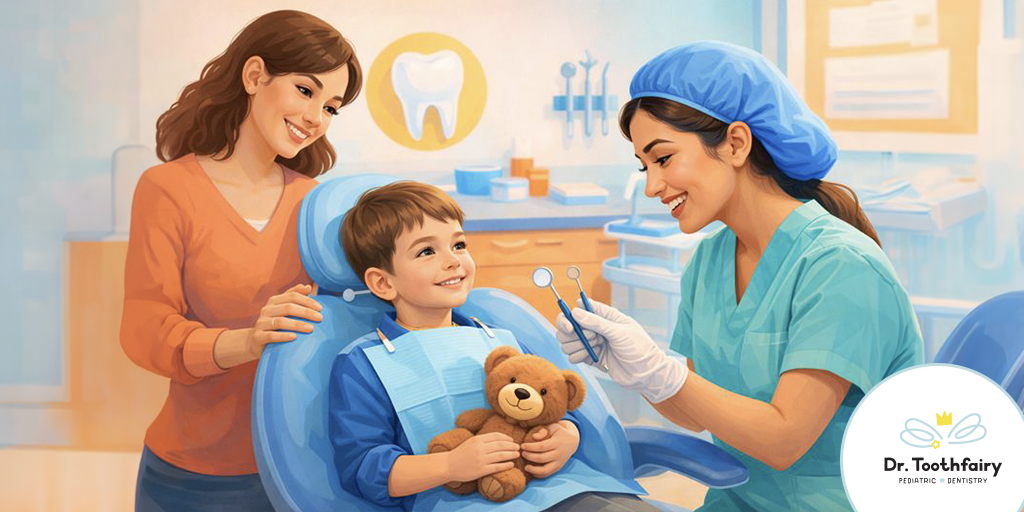
Does your child become tearful or withdrawn when it’s time for a dental appointment? Dental anxiety in children is more common than many parents realize, affecting up to 20% of young patients. The good news is that with the right approach, you can help your child overcome their fears and develop a healthy relationship with dental care. Understanding the signs of dental anxiety and learning proven calming strategies can transform stressful appointments into positive experiences.
Understanding Dental Anxiety in Children
Dental anxiety goes beyond simple nervousness. It’s a genuine fear response that can cause physical symptoms and emotional distress. Children may develop this anxiety from various sources, including a previous negative experience, hearing scary stories from siblings or friends, or simply fearing the unknown. Some children are naturally more sensitive to new environments, sounds, and sensations, making them more prone to dental fear.
At Dr. Toothfairy Pediatric Dentistry, we understand that every child is unique. What triggers anxiety in one child may not affect another at all. That’s why recognizing the specific signs your child displays helps us create a customized approach for their comfort.
Signs of Dental Anxiety to Watch For
Children often can’t articulate their fears in words. Instead, they communicate through behaviors and physical symptoms. Being aware of these signs helps you address anxiety before it escalates.
Behavioral Signs
Watch for changes in your child’s behavior as appointment day approaches. Common behavioral signs of dental anxiety include:
- Crying, screaming, or throwing tantrums when discussing the dentist
- Refusing to open their mouth during the appointment
- Clinging to parents and refusing to sit in the dental chair
- Asking repetitive questions about what will happen
- Trying to negotiate their way out of appointments
Physical Symptoms
Anxiety often manifests physically in children. Your child may experience stomachaches, headaches, or nausea before or during appointments. Some children have trouble sleeping the night before a dental visit. Others may complain of feeling dizzy or have sweaty palms when entering the dental office.
Proven Calming Strategies That Work
Helping your child feel calm at the dentist requires a combination of preparation, communication, and the right dental team. These evidence-based strategies have helped countless children overcome their dental fears.
Prepare Your Child Before the Visit
Preparation is one of the most effective ways to reduce dental anxiety. Talk to your child about what to expect using positive, age-appropriate language. Avoid words like “hurt,” “shot,” or “pain.” Instead, focus on how the dentist helps keep their smile healthy and strong.
Consider reading children’s books about visiting the dentist together. Playing pretend dentist at home lets your child become familiar with the process in a safe environment. Our first visit guide provides additional tips specifically designed for nervous children.
Use the Tell-Show-Do Technique
The tell-show-do technique is a standard approach in pediatric dentistry that significantly reduces anxiety. First, we tell your child what we’re going to do using simple, friendly language. Then, we show them the tools we’ll use in a non-threatening way. Finally, we perform the procedure gently while continuing to explain each step.
According to the American Academy of Pediatric Dentistry, this technique gives children a sense of control and predictability, which naturally reduces fear.
Distraction and Comfort Techniques
Modern pediatric dental offices use various distraction methods to help children relax. At our office, we offer ceiling-mounted screens so children can watch their favorite shows during treatment. Some children respond well to counting games or focusing on their breathing.
Bringing a comfort item from home, such as a stuffed animal or blanket, can provide emotional security during the appointment. We encourage parents to bring whatever helps their child feel safe.
Positive Reinforcement
Celebrating small victories builds confidence over time. Praise your child for their bravery, regardless of how the appointment went. Focus on what they did well rather than any difficult moments. Many pediatric dental offices, including ours, offer small rewards after visits to create positive associations with dental care.
When to Seek Additional Support
For some children, standard calming strategies may not be enough. If your child’s dental anxiety is severe or if they have additional needs, additional support options are available.
Sedation Dentistry Options
When dental anxiety significantly interferes with necessary treatment, sedation dentistry may be recommended. Options range from nitrous oxide (laughing gas) to deeper sedation for more extensive procedures. We discuss all options thoroughly with parents and only recommend sedation when it’s in the child’s best interest.
The American Dental Association provides guidelines ensuring sedation is used safely and appropriately in pediatric settings.
Creating Long-Term Positive Dental Experiences
Overcoming dental anxiety is a journey, not a single event. With consistent positive experiences, most children gradually become more comfortable with dental visits. Starting dental visits early helps children view the dentist as a normal part of their healthcare routine.
Regular six-month checkups at a child-friendly practice help maintain familiarity and comfort. Children who see the same dental team consistently develop trust and often look forward to their appointments. Our warm, welcoming environment at Dr. Toothfairy is specifically designed to help children feel at ease.
Partner With a Pediatric Dentist Who Understands
Choosing a dentist who specializes in treating children makes a significant difference in managing dental anxiety. Pediatric dentists receive additional training in child psychology and behavior management techniques. We understand that patience, gentleness, and creativity are essential when working with anxious children.
If your child struggles with dental anxiety, we’re here to help. Schedule an appointment at Dr. Toothfairy Pediatric Dentistry, where we specialize in creating calm, positive experiences for every child. Together, we can help your little one build a lifetime of healthy dental habits without the fear.
Need A Dentist Appointment For Your Child?
Time for your child's first dental visit? Looking for a new pediatric dentist in Falls Church, VA for your Children? Request an appointment with Dr. Toothfairy.